Pre-Login and Online Services
We currently have an on-premises Active Directory and have Pre-Login enabled with connect at boot enabled. We defined internal destinations (domain domain controllers) as allowed destinations, so the devices can reach the domain controllers before the user has logged in. This worked fine so far. However, now we want to migrate to Entra ID and Intune only, which means that the machines now need to reach Entra and Intune before or directly after the login. Since the pre login mode doesn't allow them to reach all URLs of Entra ID and Intune, we get problems during log in and for the Intune enrollement (which happens after the login of a new user but before the user has authenticated with the CATO client). We also have the same problem with NinjaOne which we use to manage endpoints: We would like to be able to reach endpoints before a user has logged in. In the allowed destinations for the Pre login mode, I can only provide internal targets and IPs, but can't put any Internet hostnames so the devices can reach Entra ID and Intune before the user has authenticated. So what is the solution here? We want to use Pre login to have the security it provides and prevents the devices from having open Internet access before the user has authenticated with CATO, but really need to resolve these issues that are caused by it when it comes to connect to our management services before the user has authenticated. Thank you in advance.213Views2likes7Comments
Disable SCIM User
It takes about 40 minutes once the user is deleted from from the IDP. Are there any other options for disabling a SCIM user? My thought was to create a WAN firewall rule to deny the user access until the scim update happens. Currently user are setup for split tunneling so I wouldnt need an Internet FW rule but if split tunneling was not in place then I would create a rule here as well.81Views0likes7Comments
LDAP To SCIM Migration
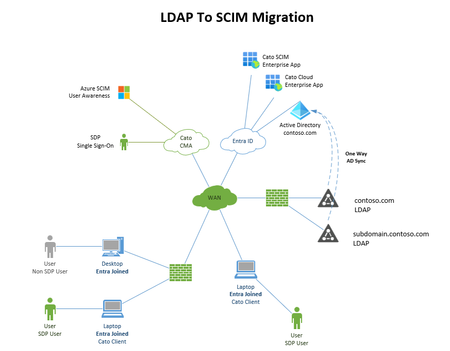
We are planning to migrate from Cato Directory Services LDAP & User Awareness to Cato SCIM user provisioning and looking to get some feedback if anyone has performed this migration and if they encountered any issues during the migrations. We currently have a few domains, over 3500 users and not everyone has an SDP lic, a mixture of Entra joined and non-Entra joined devices. SSO for VPN Users. I'm trying to understand how users are going to be mapped to the workstations they are logging in from and identified since Cato currently taps into DC's Event viewer to map users to computers and LAN IP's. We have Shared computers where an SDP license is not needed as these are fixed computers. We see the user login events, but not the details for the system they are logging in from and LAN IP. Will there be problems if we migrate 1 domain first and wait a week or two to iron out any bugs? Should Always-On Windows RegKey be removed from all systems prior the migration?158Views0likes3Comments
AWS - OpenVPN routing clash for Cato SDP
Hi, We have been a Cato customer for just over a year now and we have a hybrid network Infra, of some onprem servers and new workloads been hosted in both AWS & GCP. My question is around the use of existing OpenVPN for accessing our AWS trusted VPCs and users having issues with Cato SDP and OpenVPN clashing for DNS/routes etc.. when trying to access the AWS vs. Onprem server environments. We need staff to be on Cato SDP all the time for montioring, audting and best security practices.. however it clashes with some users who need OpenVPN AWS access. What do other companies do to get around this issue (if they have a similar routing issue at all?). Split tunnel vs. AWS marketplace Cato virtual socket (EC2 instance needed per account?). I would be very interested to see if others have seen or have a good work around to this dilemia.103Views0likes1Comment
Visit website with error(HTTP Version Not Supported) with Cato
HTTP Version Not Supported Your client is using HTTP version 1.1, which is not supported. This service requires HTTP/2. Please update your client or contact support Reply from Cato Support : I have confirmed internally that HTTP/2 is not supported yet.152Views0likes2Comments
Windows CA with Cato for Device Posture Check
I’m looking for guidance on configuring a Windows CA to issue and validate RSA certificates for device posture verification in Cato. Has anyone implemented this integration?What’s the best approach for certificate management? Should we use self-signed certificates or purchase individual device certificates from DigiCert or another vendor? If anyone has implemented this, please share the pros and cons.199Views0likes2CommentsCato Rapid Recap | June 2025
📣 Cato Rapid Recap | June 2025 Staying current on the latest features, best practices, and platform improvements isn’t always easy. That’s why I’m kicking off a new 2-minute monthly recap — designed to help you: ✅ Quickly catch up on what’s new ✅ Share relevant updates with prospects, POCs, and customers ✅ Stay aligned on Cato’s evolving value 📅 Plan is to release this every month — short, actionable, and easy to share. ▶️ Watch the June Recap Got feedback or requests for next month’s recap? Drop a comment below 👇74Views2likes0Comments"400 Bad Request" Error Occurs with Okta SSO - Unable to Log in to VPN
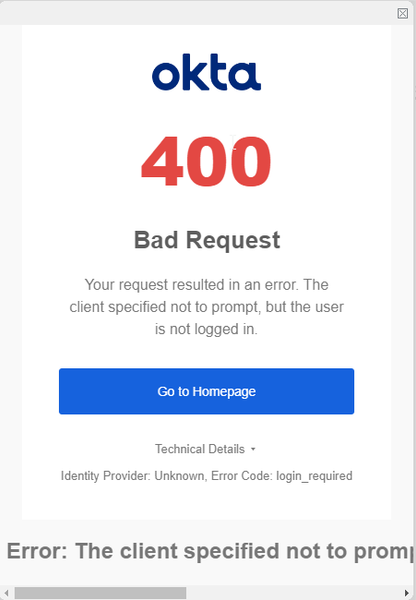
I configured SSO authentication with Okta as the IdP for the Cato VPN Client, but when attempting to connect to the VPN, I receive a '400 Bad Request' error and cannot log in. Setup: "Single Sign-On" has been configured in CMA "Cato Portal" configured in Okta A VPN connection has been attempted using the Cato Client During authentication, the following error message appears: Error Message: "400 Bad Request" What I have tried: I found the following information in Okta's Knowledge Base, but I was unable to locate the corresponding setting in the Cato Portal Make sure that the redirect_uri, http://localhost:8080/authorization-code/callback is registered as an allowed Sign-in redirect URI in Open ID Client for the application being used [Reference link] (https://support.okta.com/help/s/article/The-redirect-uri-parameter-must-be-an-absolute-URI?language=en_US) Question: If anyone has encountered and resolved this issue, I would appreciate any insights on key configuration points or possible solutions. Additional Information: I am using Okta's free Developer edition (https://developer.okta.com/login/) for testing.281Views0likes7Comments
Containers and Network Rules
Hi! We use an IP container for storing large amounts of IP ranges and reference the container in Internet firewall rules. We have a problem we could overcome by referencing the IP Container in a Network Rule, but apparently, the container can only be used with firewall rules, not network rules. Does anyone have any suggestions on how to work around this? In simple terms, the requirement is to define specific IP ranges, to which traffic would then be routed through a NAT rule and a static IP.271Views0likes3Comments